Fire and smoke damage, Fort Lauderdale
Fire Damage Restoration Fort Lauderdale, FL
Alpha Water provides fire damage restoration Fort Lauderdale homes, condos and businesses need once the fire department has released the property. We remove the water left from firefighting, clean soot and smoke residue, treat odor and plan the repairs, with photos and notes for your insurer.
- Firefighting water removal
- Soot and smoke cleanup
- Smoke odor treatment
- Repairs after cleanup
When you call, tell us what burned, which rooms have smoke or water damage and whether the fire department has cleared the building.
Safety first
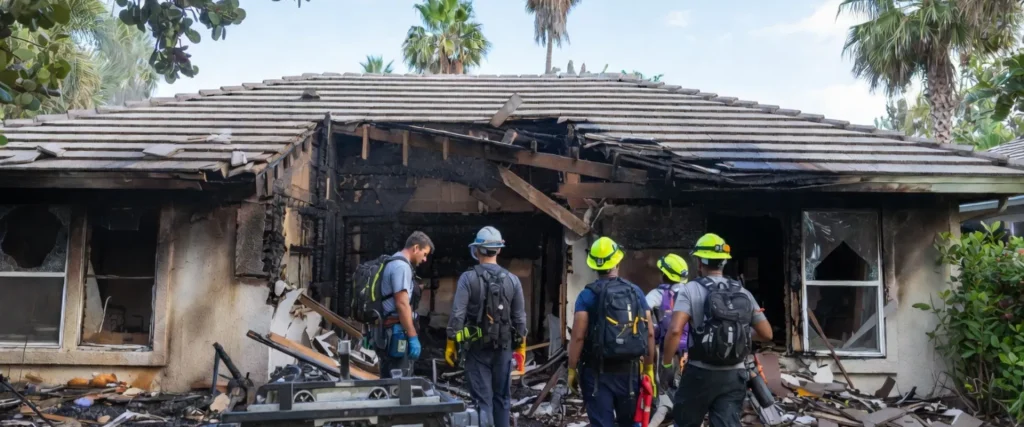
Work begins after fire department clearance
Water, soot and odor
Handled together, not by three separate crews
Documented work
Photos and notes you can share with your insurer
Homes and businesses
Houses, condos, rentals and commercial spaces
What we do
What Does Fire Damage Restoration Include?
Fire damage restoration covers everything between the fire department leaving and a clean, repaired, odor controlled property. Most fires cause three kinds of damage at once: burned materials, smoke and soot spread through the building, and water from firefighting. Each needs a different method.
Firefighting water removal
Hoses can leave more water than the fire did damage. We extract it and dry walls, floors and cabinets; see our water damage restoration page for how drying works.
Soot and smoke residue cleaning
Walls, ceilings, cabinets and hard surfaces are cleaned with methods matched to the residue, from dry sponging to wet cleaning.
Smoke odor treatment
Odor is reduced by removing burned materials and cleaning first, then deodorizing; the method depends on the fire and the space.
Board up and roof tarping
Openings left by the fire or firefighters are covered to keep out rain, wind and intruders while the work is planned.
Contents cleaning
Items that can be cleaned are separated from those that cannot, and everything is listed and photographed for your claim.
Repairs and rebuilding
Burned or soaked drywall, insulation, trim, cabinets and flooring are replaced once cleaning and drying are complete.
Ask us on the call which parts of your job our own crew handles and which we coordinate with a licensed contractor, such as structural or electrical repairs.
First steps
What Should You Do After a Fire?
Wait until the fire department says the building is safe, then call your insurer and a restoration company. The U.S. Fire Administration’s After the Fire guide warns that floors and walls may not be as safe as they look, and that soot and dirty water can contain things that make people sick.
- Stay out until the fire department clears the building, and leave utilities off until they are checked.
- Call your insurance company, ask what they need first and keep every receipt.
- Take photos of the damage only from areas you have been told are safe.
- Let local police know the home will be empty, and get openings covered.
- Do not wipe or scrub soot yourself; it smears into paint and fabric.
- Do not run the air conditioning until the system is checked, because it can pull soot through the house.
Smoke and soot damage
Smoke travels far beyond the burned room, and the residue it leaves decides how a surface is cleaned. Fast, hot fires leave dry, powdery soot. Burning plastics and foam leave a sticky, smeared residue. Kitchen fires that burn food leave a thin, nearly invisible film with a strong odor.
Because residue sits inside cabinets, closets, attics and duct work, odor can linger after a room looks clean. Odor treatment works most reliably after burned materials are removed and surfaces are cleaned. Results depend on what burned and for how long, so we explain what can be cleaned and what is better replaced.
Water after the fire
Water Damage From Firefighting
The water used to put out a fire soaks drywall, insulation, subfloors and the rooms or units below, so it needs extraction and drying like any other water loss. The EPA advises drying water damaged areas within 24 to 48 hours to prevent mold growth. In Fort Lauderdale’s humid climate, wet materials left in a closed, unpowered building can stay damp for a long time.
We remove standing water, set up drying equipment and check materials with moisture readings. If growth appears in areas that stayed wet too long, our mold remediation team can take over that part of the job.
Has the Fire Department Released Your Property?
Call us once you are cleared to return or once your insurer asks you to arrange cleanup. We will ask what burned, where smoke and water reached, and whether the building has power.
How it works
Our Fire Damage Restoration Process
Every Fort Lauderdale fire damage restoration job follows the same order: make safe, document, clean, dry, deodorize, rebuild. The time each step takes depends on the size of the fire, how far smoke and water spread and how much must be replaced.
- Confirm it is safe. We check that the fire department and utility providers have released the building before work starts.
- Assess and document. We walk the property, photograph damage and note which materials and contents can be cleaned.
- Secure the property. Broken windows, doors and roof openings are covered where needed.
- Remove water and debris. Firefighting water is extracted, burned debris is removed and drying equipment is set up.
- Clean soot and smoke residue. Surfaces and salvageable contents are cleaned with methods suited to the residue.
- Treat odor. Once cleaning is done, deodorization targets odor left in the structure and air.
- Repair and rebuild. Damaged materials are replaced and finishes restored, so the property can be used again.
Who we help
Residential and Commercial Fire Damage Restoration
Alpha Water works on houses, condos, rentals and commercial buildings across Fort Lauderdale. The cleaning methods are similar; access, neighbors, tenants and business hours change how the work is planned.
Houses
Kitchen and electrical fires are common starting points. Smoke often reaches bedrooms, closets and the attic even when flames stayed in one room.
Condos and high rises
Smoke can move through hallways and shafts, and firefighting water can reach units below. Owners, the association and insurers each need their own records.
Rental properties
Property managers need clear notes on affected units, what was removed and when tenants can return.
Commercial spaces
Offices, shops and restaurants need cleaning planned in phases where possible, with documentation for property and business interruption claims.
Project photos
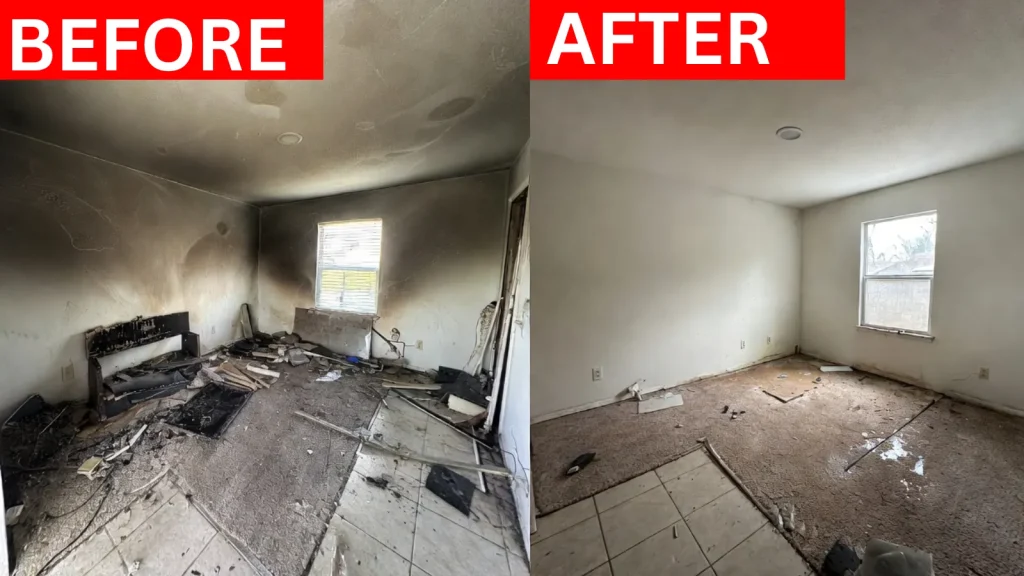
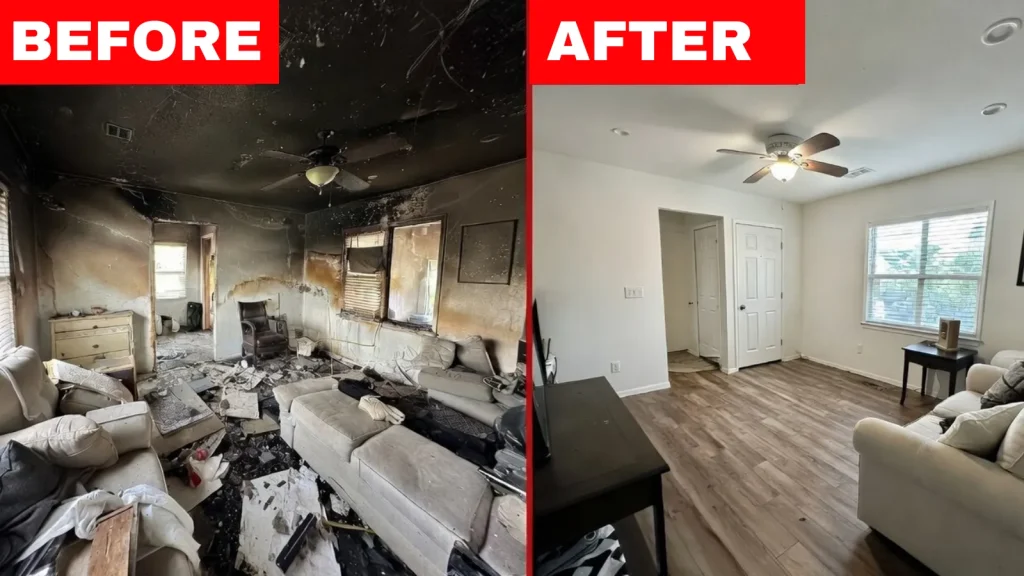
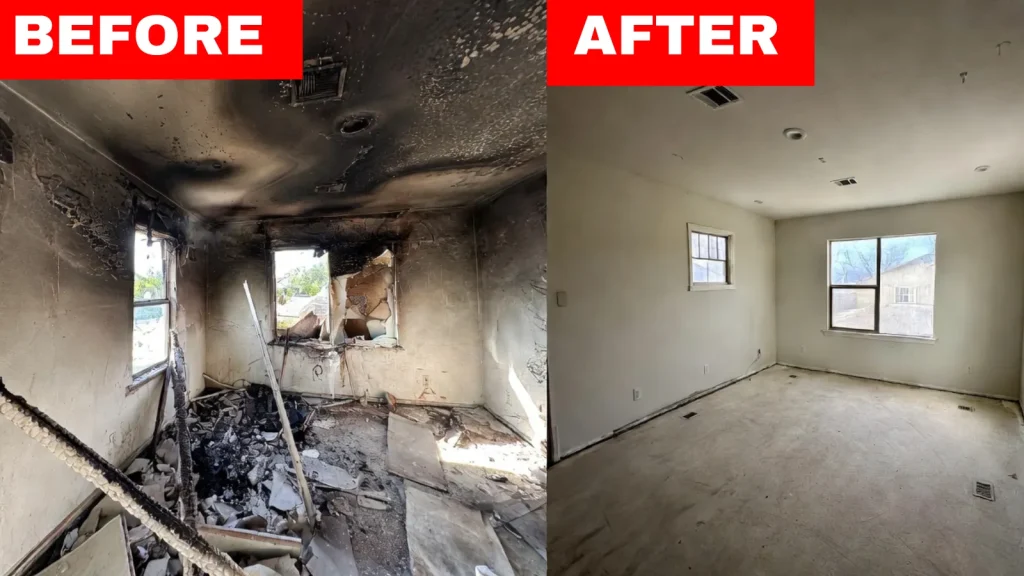
Fire Damage Restoration Results in Fort Lauderdale, FL
These photos show fire damage cleanup and repair work from Alpha Water. Every fire is different: results depend on what burned, how long smoke and water sat, and which materials can be cleaned rather than replaced.
Local conditions
Fire Damage Restoration Across Fort Lauderdale
We provide fire damage restoration Fort Lauderdale property owners can call on throughout the city, including Downtown, Flagler Village, Las Olas, Rio Vista, Victoria Park and Coral Ridge. If you are in a nearby Broward County city, call and we will confirm whether your address is covered.
Condo and apartment buildings
Fort Lauderdale has many condo and apartment buildings, where one kitchen fire can send smoke into hallways and water into the units below.
Humidity and drying
Warm, humid air slows drying. Wet drywall and insulation in a building without power or air conditioning need equipment brought in quickly.
Hurricane season
From June 1 to November 30, an open roof or broken windows after a fire face a higher chance of storm rain, so temporary covers matter more.
Older and newer homes side by side
Neighborhoods such as Victoria Park and Rio Vista mix older houses with newer builds, so materials and the way smoke travels differ from one home to the next.
What Customers Have Said
Cost and insurance
What Affects the Cost of Fire Damage Restoration?
Cost depends on how much burned, how far smoke and water spread, how many contents need cleaning and how much must be rebuilt. You will know the scope and the price for each stage before that stage begins.
- Size and spread. A contained stove fire costs far less than smoke through a whole home or several condo units.
- Type of residue. Sticky residue from plastics and odor from kitchen fires take more cleaning than dry soot.
- Water and drying. Firefighting water adds extraction and drying, especially when it reaches floors below.
- Contents. Cleaning, moving or storing belongings adds to the job.
- Repairs. Replacing drywall, cabinets, flooring or roofing is often the largest part of the cost.
Insurance: coverage depends on your policy, its exclusions and deductible, and the cause of the fire. Many homeowner policies include additional living expenses if you cannot stay at home, so ask your insurer. In Florida, notice of an initial property claim is due within one year after the date of loss. We provide photos and notes you can share with your adjuster; the insurer decides what is covered.
Questions
Fire Damage Restoration FAQs
Talk to Us About Fire Damage Restoration in Fort Lauderdale
Tell us what burned, where smoke and water reached, whether the property has been released and who your insurer is. We will explain the next step and what to avoid until we arrive.
Related services: water damage restoration and mold remediation in Fort Lauderdale.